How to Tell When Squash and Pumpkins Are Ripe
Harvest time arrives and suddenly you are standing on the plot, knife in hand, staring at a squash that looks perfectly good — and yet you hesitate. Cut it today and it might be watery, bland and soft by December. Leave it another week and the first frost, or the slugs, may get there first. The reassuring part is that winter squash and pumpkins give you plenty of signals once you know what to look for, and those signals are far more reliable than a date on the calendar.
Know which crop you are dealing with
Courgettes, marrows and patty pans are summer squash. They are eaten young and soft-skinned, and their ripeness is obvious: if the fruit is the size you want, cut it. Waiting does them no favours at all.
Winter squash and pumpkins — butternut, Crown Prince, kabocha, onion squash, spaghetti squash and the rest — work the other way round. They are meant to be left on the plant until the skin has hardened and the seeds have fully matured. That tough rind is what allows them to sit in a cool room for months rather than days.
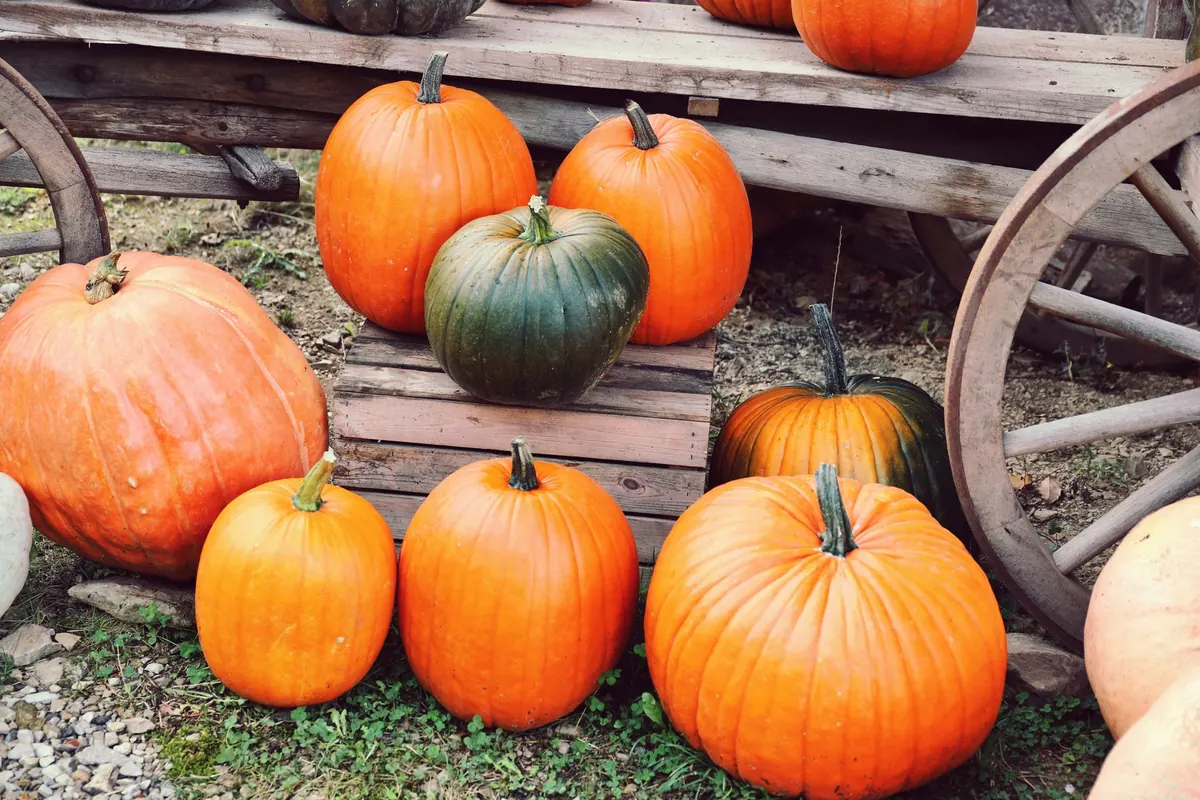
Carving pumpkins complicate matters. The big orange types bred for lanterns are usually cut early because they are wanted for October, and their flesh tends to be thin and stringy. If you want to eat what you carve, grow a culinary variety instead — you will get a better lantern and a far better soup.
The thumbnail test
This is the single most useful check, and it costs nothing. Press your thumbnail firmly into the rind. If it sinks in and leaves a dent you can see afterwards, the squash is not ready. If your nail slides off with barely a scratch, it is.
Test in two or three places — near the stem end, around the middle, and near the blossom end. Rinds harden unevenly, and one soft patch means another week or two on the vine. Softness there also tends to be the first place rot sets in.
Do not assume a squash cut too early will finish ripening indoors. It may colour up, and it may soften, but it will not develop the sweetness and dense texture of one left to finish properly. More importantly, it will not store.
Watch the stem for corking
The stalk tells you what the rind sometimes hides. On an unripe squash it is green, fleshy and full of sap. As the fruit matures the plant stops feeding it, and the stem begins to dry and shrink — growers call this corking. It shifts from green to a woody brown, and a thumb rubbed along it feels like old hazel rather than a cucumber.
A ripe squash often parts from the vine with a light tug. If it needs a fight, leave it alone. When the time comes, cut with secateurs and leave 3–5cm of stem attached. Never lift a squash by its stem; a snapped stem is an open door for mould, and a fruit with no stem will rarely keep past a few weeks. Handle every one of them as if it were a full mug of tea.
Colour, weight and the sound of a good knock
Ripe winter squash deepen in colour and lose their shine. A dull, matte rind is a better sign than a glossy one, which usually means the fruit is still growing. Butternut turns a warm, even buff; kabocha and Crown Prince go a deep, flat green; onion squash finish a rich orange-red.
Look at the ground spot — the patch where the fruit rested on the soil. On an immature squash it is pale green or white. When it turns cream, buff or soft yellow-orange, maturity is close.
Then lift it. A ripe squash feels heavier than it looks for its size, a sign that the flesh is dense and the water content has dropped. Tap it with a knuckle and you should hear a dull, hollow thud. An unripe one sounds flatter and more solid.
If in doubt, wait a week — but never past the first hard frost.
Curing: the step most growers skip
Curing is the fortnight that turns a decent squash into one that keeps until spring. It heals small nicks in the skin, dries the surface and hardens the rind further. Skip it and you lose weeks of storage, often without realising why.
To cure winter squash, keep them warm, dry and airy for around ten days to two weeks. A greenhouse bench, a sunny porch or a spare room at roughly 20–25°C works well. Space them so air moves around every fruit and none are touching. Turn them once or twice during the fortnight so any damp patches dry out, and run a fan on low if the air is still.
Acorn squash and delicata are the exception. They cure quickly, keep only a few weeks and are best eaten by Christmas. Left in a warm room too long, they simply dry out.
Storing through winter
Once cured, move them somewhere cool, dark and dry — around 10–13°C is the sweet spot. A frost-free shed, garage or cool cupboard is ideal. Colder than about 10°C and the flesh suffers chilling damage; warmer than 15°C and they slowly soften and lose flavour.
Never wash squash before storing. Damp is the enemy. Stand them in a single layer on slatted shelves, in open crates, or on newspaper, and keep them from touching each other. Check every couple of weeks. Anything that feels soft or has developed a spot should be eaten straight away, ideally before it spoils its neighbours.
A harvest routine to follow
When the plants start to die back and the weather turns, work through this in order:
- Press a thumbnail into the rind near the stem and again around the middle. No dent, no pick.
- Check the stem. Green and sappy means wait; brown and woody means ready.
- Look at the colour and the ground spot. Even colour, matte sheen, cream or buff underneath.
- Cut cleanly with 3–5cm of stem, and carry each fruit in two hands or in a crate.
- Cure somewhere warm, dry and airy for ten days to two weeks.
- Move to cool, dark, dry storage and check the crop fortnightly.
And when a hard frost appears in the forecast, do not gamble. If the fruit is nearly there, cut everything, leave the stems on and cure indoors. A slightly under-ripe squash that has been cured carefully will always beat one that spent the night frozen on the vine.
Photo: Christina & Peter / Pexels
How to Cure and Store Onions and Garlic for Winter
Curing onions and garlic properly dries the necks and skins, so bulbs stay firm through winter. Here's how...
How to Grow Blueberries in Acidic Compost
Blueberries need acid soil to crop well. Here is how to keep the pH right in pots, water and feed them...